
When Minnesota gives us a mild afternoon late in the year, it’s tempting to squeeze in one more outdoor project. But is it warm enough to paint your house?
There isn’t one temperature cutoff that works for every exterior paint, surface, and project. It’s too cold when the conditions fall outside the chosen products’ instructions—during application or the required drying period afterward. The paint, the siding, overnight temperatures, and moisture all belong in that decision. [2] [3]
For homeowners in Ramsey, Andover, Elk River, and nearby communities, the useful question is: “Do we have a suitable weather window for this particular job?”
Check three temperatures, not just the weather app
An outdoor forecast tells you the air temperature. The surface being painted can have a different temperature, and so can paint stored in a cold garage or vehicle. Benjamin Moore’s temperature guidance recommends checking the specific product instructions and notes that an infrared thermometer can help measure the surface. [2]
Ask your painter how they will check conditions on the actual surfaces being painted. A forecast is a starting point; it doesn’t measure your siding.
A product example: Sherwin-Williams Duration Exterior Acrylic Satin
Consider Duration Exterior Acrylic Satin, K33-Series. Its March 2026 data sheet gives these product-specific instructions: [1]
- Air, surface, and paint temperatures must be above 35°F and at least 5°F above the dew point.
- Do not apply if air or surface temperatures may fall below 35°F within 48 hours.
- Avoid application when rain or snow is expected within 2–3 hours.
- For large expanses of metal siding, air, surface, and paint must be at least 50°F.
- At 50% relative humidity, recoat time is 24–48 hours at 35–45°F, compared with four hours at 50°F. Temperature, humidity, and coating thickness affect actual times. [1]
The rain-or-snow window does not replace the temperature and recoat requirements. Confirm the current instructions for the exact product. [1]
Why the overnight forecast matters
Painting conditions need to remain suitable after the crew finishes. Sherwin-Williams warns that cold conditions and moisture can interfere with proper paint-film formation, potentially causing staining or adhesion problems. A daytime high alone doesn’t answer whether the job has enough drying time. [3]
Before a late-season start, ask your contractor to discuss the overnight forecast, when painting will stop for the day, and how the required time between coats fits the schedule.
Dew matters even when no rain is forecast
The National Weather Service defines dew point as the temperature at which water vapor condenses into liquid droplets. That helps explain why a dry-looking forecast can still include moisture on outdoor surfaces. [4]
Rain is only one part of the moisture check. Benjamin Moore advises waiting until the painting surface is dry after rainfall. Sherwin-Williams also cautions about dew affecting fresh paint as temperatures fall. [2] [3]
Ask how your painter will assess damp siding, morning dew, and the available drying window. Don’t assume a surface is ready just because the rain has stopped.
Preparation materials need their own weather check
An exterior project may also involve primer, caulk, or repair materials. Confirm the requirements for each product rather than borrowing the topcoat’s temperature limit. Duration’s data sheet specifically directs users to the primer label for its application limitations. [1]
Ask which preparation steps are included, which materials will be used, and how their drying or paint-over times affect the work. Agree on responsibilities before doing any preparation yourself.
A local example: early-October staining in Blaine
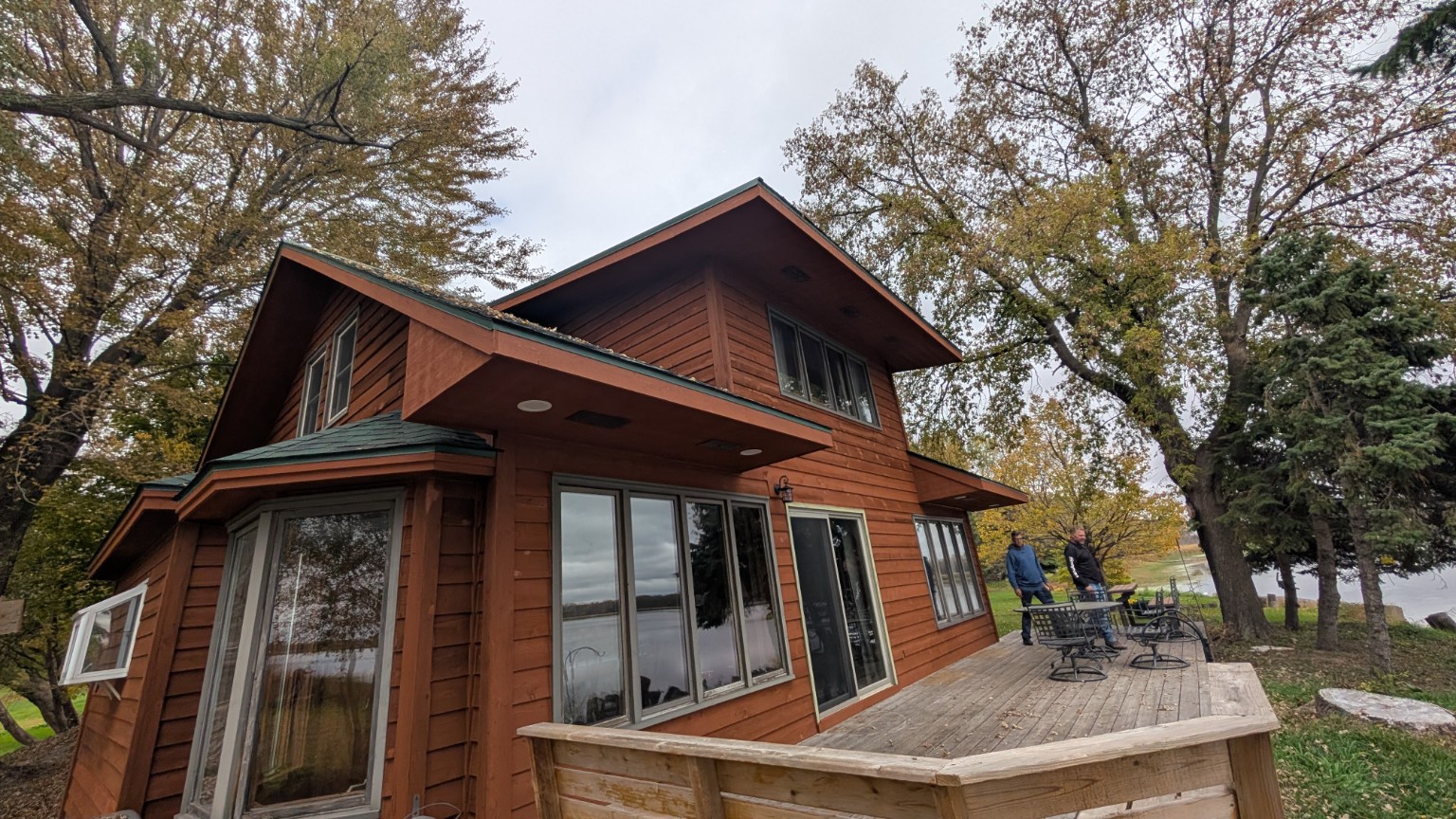
The photos accompanying this article show a home in Blaine, Minnesota, while semi-transparent exterior staining was in progress in early October.
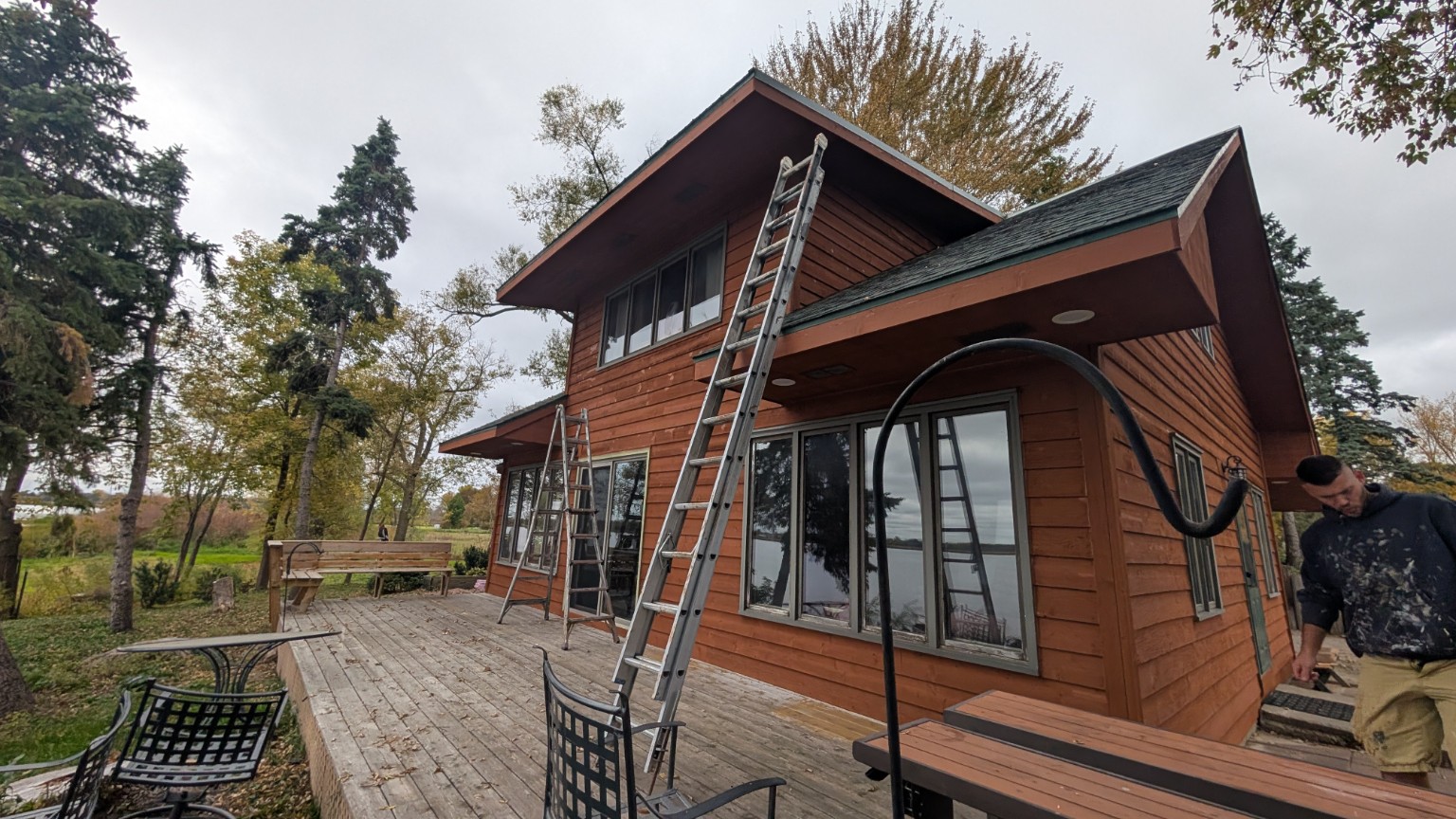
For a staining project like this, ask the same weather questions—but use the stain manufacturer’s instructions. The Duration paint example above is not an application guide for the stain shown in these photos. Without the exact stain product and conditions, a photo or calendar date alone cannot tell you whether a painting or staining window is suitable.
Watch with Derik
A closer look at cold-weather painting
Watch Derik’s related video, then use the checklist below to discuss your own project.
Watch on YouTube ↗A quick checklist before exterior painting starts
Use these questions when discussing a late-season estimate or start date:
You don’t need to become a paint chemist. You should be able to understand the plan and why your painter recommends starting, adjusting the schedule, or waiting.
When waiting is the better decision
If the job cannot meet the products’ requirements, postponing is a reasonable decision. A convenient date shouldn’t decide whether the conditions are suitable.
You can still use the time to request an estimate, agree on repairs and scope, compare colors, and discuss a future painting window. If you have peeling paint or exposed areas you’re concerned about, ask your contractor to assess them rather than choosing a temporary coating on your own.
Whether your home is in Coon Rapids, Anoka, Champlin, or another nearby community, ask for a plan based on the house and the products—not simply the month on the calendar.
Planning an exterior painting project?
Love Your Home offers free estimates for homeowners in the northwest Twin Cities area. Request an on-site estimate to discuss your home’s condition, preparation needs, and timing, or start with a photo-based estimate. A complimentary color consultation is included with your painting project.
Call 763-300-5834 or request your estimate online.
Sources & product instructions
- Sherwin-Williams: Duration Exterior Acrylic Satin, K33-Series ↗
March 2026 technical data: application conditions, drying and recoat times, and primer limitations. - Benjamin Moore: Temperature Guide ↗
Paint and surface temperatures, product instructions, and dry surfaces after rain. - Sherwin-Williams: Exterior Application FAQs ↗
Cold temperatures, moisture, and paint-film formation. - National Weather Service: Dew Point ↗
The definition of dew point; not a Minnesota weather forecast.